Stonehouse Gardening Club were recently treated to a talk by a real expert, Philip Aubrey, M. Hort , formerly Head of Birmingham University Botanical Gardens, provided insight into the complexities into garden ponds and water features.
“Every garden should have one” is his view with the objective of a balanced ecosystem not a smelly bog!
Safety first
Concerns about safety can usually be mitigated with training and guards if necessary and the pond should be in full sunlight away from trees. Water features can be in the shade. Any electrical work for pumps or lights should have a circuit breaker fitted by a qualified electrician. Getting the site right is key to success, most ponds have a flexible liner (Butyl, EPDM or PVC depending on your budget), and the size needs to take account of width/length plus 2 x depth plus 20cm. A depth of 45 cm is needed to avoid fish freezing in winter.
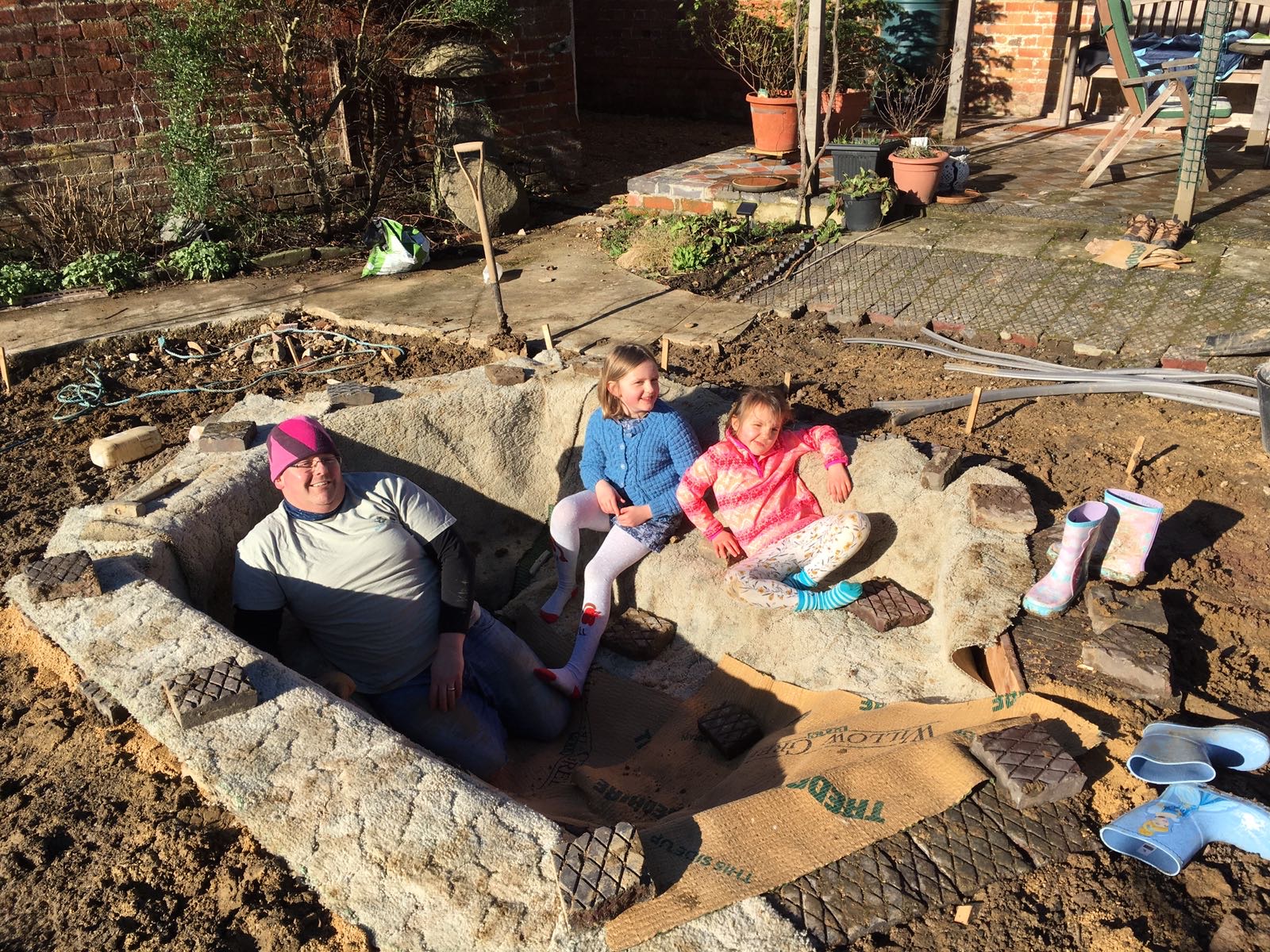

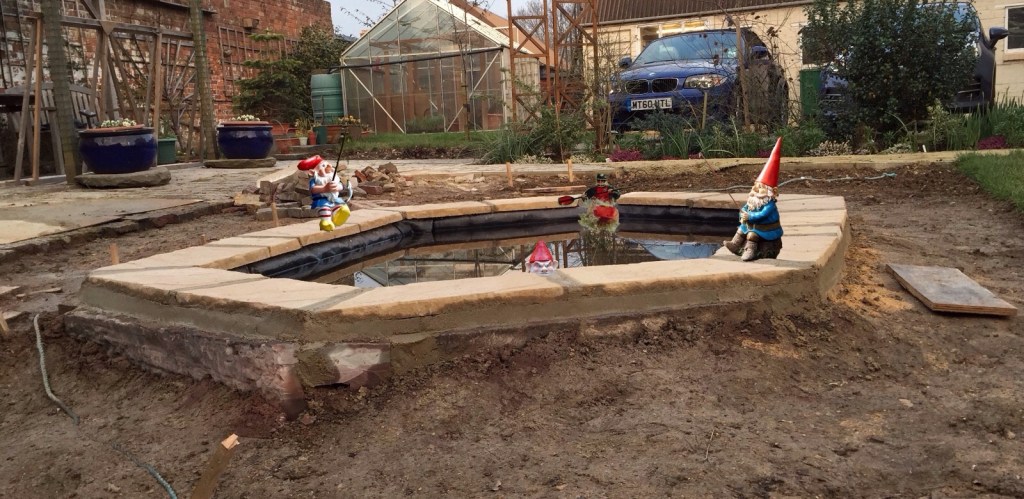
Image: pond with lining (left), Butyl liner filled with water (right)
The hole should be excavated with care taken to remove sharp stones or any protruding roots…their sharp edges can puncture a liner, so carefully line the hole with old carpets, cardboard . Check the levels are correct, don’t forget the topsoil can be reused maybe as basis of a rockery, but subsoil is best disposed of. Having different shelves as levels provides the right water depth for different classes of plants…and creating a “beach “ area at one end allows any trapped animals to escape as well as an opportunity for a bog-garden. Pre-formed liners come in many shapes and sizes and avoid the liner problems, but do need care in installing with a sharp sand used to provide a firm base for the bottom and any levels.
For contemplation and charm
Water features provide a relaxing sound, a place for birds to drink and wash and well as adding charm to the garden. Complex structures can be built or again a preformed tub and lid with space for a stone layer used instead. The key to building waterfall features is to ensure the lip of the tray above has a clear drop to the tray below…otherwise water will leak underneath the structure.
Powering a pump is still best run from the mains supply, solar powered pumps don’t really have enough umph, and are intermittent with varying sunlight. Using UV light with a filter helps control algae growth. Note all ponds are likely to go green initially until a balance is established.
Pond plants and swampy ones to avoid
Plants in the pond are normally retained in plastic basket. Use poor soil not garden compost and cover the top with gravel to retain the soil. Four types of plans are normally needed:
- Oxygenating plants
- Cover plants
- Marginal plants
- Bog Plants
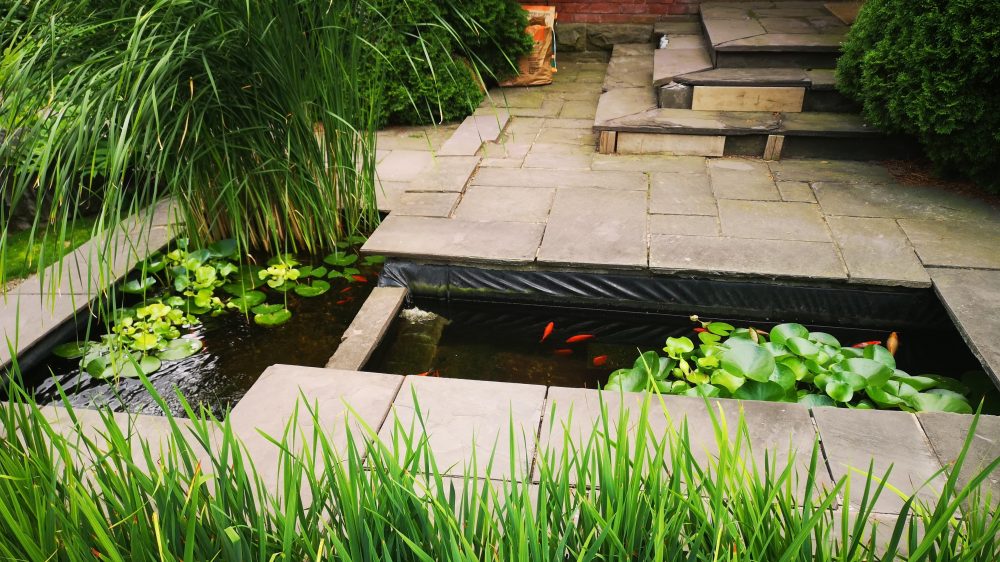
Oxygenating plants can be expensive but are vital for pond balance. Cover plants where you aim to cover 1/3 to ½ of the water surface such as water lilies need to be checked for size, depth and how vigorous they are; Nymphaea Rosea is about 6” across whilst Pygmy Rubra (Nymphaea) about 2” across.
Beware some marginal plants are non-native invasive species and may swamp your pond! Water lettuce has bulbous base and leaves and water hyacinth is not frost hardy, but can be stored over the winter months. Marsh marigold Caltra Paustris can be 3 foot tall. Avoid Bog Mint and Bog Bean as they are far too vigorous whilst Bull Rushes have sharp rhizomes which can penetrate the liner!
Typha Miriam is OK as is Pontederia. Variegated water Iris whilst with only a few weeks flowering season looks pretty all year round. Floaters or Water Soldiers are fun appearing in the summer and providing shelter for aquatic animals.
Bog plants including Eriophorum (Cotton Grass) and Candelabra primula do well with lots of colours available.
Fancy some fish?
Fish bring a pond to life. Only feed from April to September with approximately 1inch fish per square foot of pond! They will grow to the size of pond/food available.
Don’t put the fish in until at least a month after the new pond has been constructed and filled, and allow the transported plastic bag with fish to acclimatize with the pond temperature.
Goldfish and Shubunkins do best though the Herons will find them all attractive! Fish eat everything, so avoid if you want lots of dragonflies and other aquatic eggs to hatch.
Keep it clean
As for maintenance, remove dead leaves in autumn, remove any free floating clumps of algae, a barley straw bale held in an old sock and sunk in the water can help reduce blanket weed. To avoid total ice coverage in winter a football will help keep a hole free for fish.
Baskets will need rework ever couple of years, discarding about ¾ and keeping a plug of the old plant. The pond liner should last about 20-25 years before it needs to be replaced.
 Stonehouse Gardening Club